


The thought arrives without warning.
What if something terrible happens to them?
Your stomach drops. Your chest tightens. And before you can even process what's happening, you're already praying. Specific words, specific order. You can't stop until it feels "complete."
For a moment, the dread lifts. You breathe. Everything is okay.
But then it comes back. And this time, you need to pray longer. More precisely. And if you mess up? Start over.
What used to be a quick moment of reassurance has become a twenty-minute ritual. What used to feel like a choice now feels like something you have to do.
Here's what nobody tells you: the very strategy you're using to protect yourself is the reason the thoughts keep coming back stronger.
The Truth About Thought Suppression
Right now, I want you to try something.
For the next thirty seconds, whatever you do, do not think about a pink elephant.
Seriously. Don't picture it. Don't imagine its big floppy ears or that ridiculous color. Just don't think about it.
How's that going?
If you're like most people, that pink elephant is now parading through your mind like it owns the place. And the harder you tried NOT to think about it, the more persistent it became.
This isn't a weakness in your willpower. This is your brain's monitoring system working exactly as it's designed to work—and working against you.
Research on thought suppression reveals something that sounds almost absurd until you experience it: when you consciously try to avoid a thought, you activate an automatic monitoring process that searches for that exact thought.
Your brain essentially creates a security guard whose entire job is to scan for the thing you're trying not to think about. "Am I thinking about it? What about now? Now?" Every scan brings the thought back into focus.
This is why people with intrusive thoughts often find that the more desperately they try to push the thoughts away, the more intrusive they become. They're not failing to control their minds. They're caught in a mechanism that turns their own effort against them.
Why Prayer Relief Isn't What You Think
But wait—what about when you pray and the anxiety goes down? That relief is real. Doesn't that mean the prayer is working?
Here's where it gets counterintuitive.
Imagine you're visiting your brother, and you decide to bring an umbrella every single day. And every single day, it doesn't rain.
After a month of this, what would you conclude?
If you're thinking logically: probably that the weather has been dry.
But what if some part of you started to believe that the umbrella was preventing the rain?
That sounds ridiculous when we say it out loud. But this is precisely what happens with compulsive prayer and intrusive thoughts.
When a frightening thought appears and you pray, and then nothing bad happens to your loved ones, your brain draws a conclusion: the prayer worked.
The problem? Your brain never gets to learn the alternative truth—that nothing bad would have happened anyway.
Clinical research shows that these kinds of safety behaviors act as shields that prevent new learning. Instead of discovering that the danger wasn't real, your brain learns that danger was "prevented." And a danger that was prevented is still a danger. So the alarm stays active. The monitoring continues. And the thought returns.
Each time you pray and your loved ones are fine, you're not teaching your brain safety. You're teaching it that safety depends on the prayer.
The Hidden Origin of Magical Thinking
For many people, this pattern of feeling responsible for preventing harm didn't come from nowhere. There's often a moment when the brain first learned that thoughts or words might have the power to affect reality.
Sometimes it traces back to loss.
When someone we love dies suddenly—especially when we're young—the mind grasps for explanations. For some sense of control in the chaos. A fourteen-year-old who loses a grandfather might write a note expressing regret for not spending more time together. A loving gesture.
But the mind of someone wired toward responsibility can twist that gesture into something else entirely. What if my words somehow affected him? What if my guilt is causing harm even now?
This is called magical thinking—the belief that thoughts can directly influence events in the world. Research shows that around 60% of people who develop intrusive thought patterns experienced a significant stressful event beforehand, often a loss that involved guilt or unresolved responsibility.
The tragedy isn't that these feelings exist. It's that they become the template. The mind learns: my thoughts are dangerous. My words have power. If I don't do something, I could cause harm.
And so the prayer isn't just a response to the intrusive thought. It's an attempt to undo a guilt that was never deserved in the first place.
What Happens When You Stop Fighting
Remember the pink elephant?
Now think about this: after that exercise, when you moved on to reading the next paragraph, what happened to the elephant?
It faded. Naturally. Without effort.
This is the second part of how your mind works that nobody explains. When you stop actively trying not to think about something—when you just let your attention move naturally to whatever comes next—the monitoring system powers down. The thought loses its grip.
The intrusive thought about your loved ones operates the same way. It feels like if you don't pray, the thought will consume you. But research consistently shows the opposite: it's the fighting that feeds the thought. The monitoring that maintains it.
This doesn't mean the thought disappears instantly. But it does mean the thought is allowed to do what thoughts naturally do when we don't interfere—rise, linger, and fade.
How Your Brain Builds New Pathways
Here's something that might surprise you: recovery doesn't mean erasing the fear.
The old alarm system—the one that says pray or something bad will happen—doesn't get deleted. Clinical studies on exposure therapy show that what happens instead is more interesting: your brain builds a new pathway. A competing association that says, "This situation felt dangerous, but actually nothing bad happened. I'm safe."
Over time, with repetition, the new pathway becomes stronger than the old one. The old alarm might still whisper occasionally, but it no longer controls your behavior.
This is called inhibitory learning, and it's the mechanism behind why exposure-based approaches actually work.
But here's the catch: for the new learning to happen, you have to let your brain experience the moment without the safety behavior. You have to let the thought exist, feel the discomfort, and then watch as nothing bad happens without the prayer.
If you always pray, you never give your brain the data it needs to update.
How to Start Delaying Compulsions
This doesn't mean going from twenty-minute prayer rituals to zero overnight. That's not how sustainable change works.
Instead, consider a graduated approach: delay.
When the intrusive thought arrives, instead of praying immediately, wait. Even a small delay starts to weaken the automatic connection between thought and compulsion. Start with an hour. Then a day.
Each time you delay and nothing terrible happens, your brain collects a small piece of evidence. The prayer didn't prevent anything. The danger wasn't real. I'm okay.
You might already have proof this works. If you've ever reduced another compulsive behavior—like limiting hand washing to just twice, only to the wrist—you've already experienced this process. You sat with the discomfort. You didn't perform the ritual. And eventually, the urge got weaker.
The same brain that learned not washing feels dangerous but actually isn't can learn not praying feels dangerous but actually isn't.
Why Family Visits Are Practice Opportunities
There's an irony to intrusive thoughts about loved ones: they often get worse when you're actually around the people you love. The visit to your brother, the dinner with your parents, the call with your best friend—these become battlegrounds rather than moments of connection.
But if you understand what's really happening, these moments transform into something else: opportunities.
Each time you're with family and an intrusive thought appears, you have a choice. You can pray and teach your brain that the prayer is keeping them safe. Or you can let the thought exist, continue the conversation, and let your attention naturally shift—the way it did with the pink elephant.
The thought may come back. Let it. Each time it fades on its own, without your intervention, your brain updates its model of the world.
What Changes When You See the Pattern
The power of understanding the invisible process behind intrusive thoughts isn't just intellectual. It's practical.
When you know that fighting the thought activates the monitoring system, you can stop blaming yourself for "not being strong enough" to push it away. You're not failing. You're caught in a mechanism.
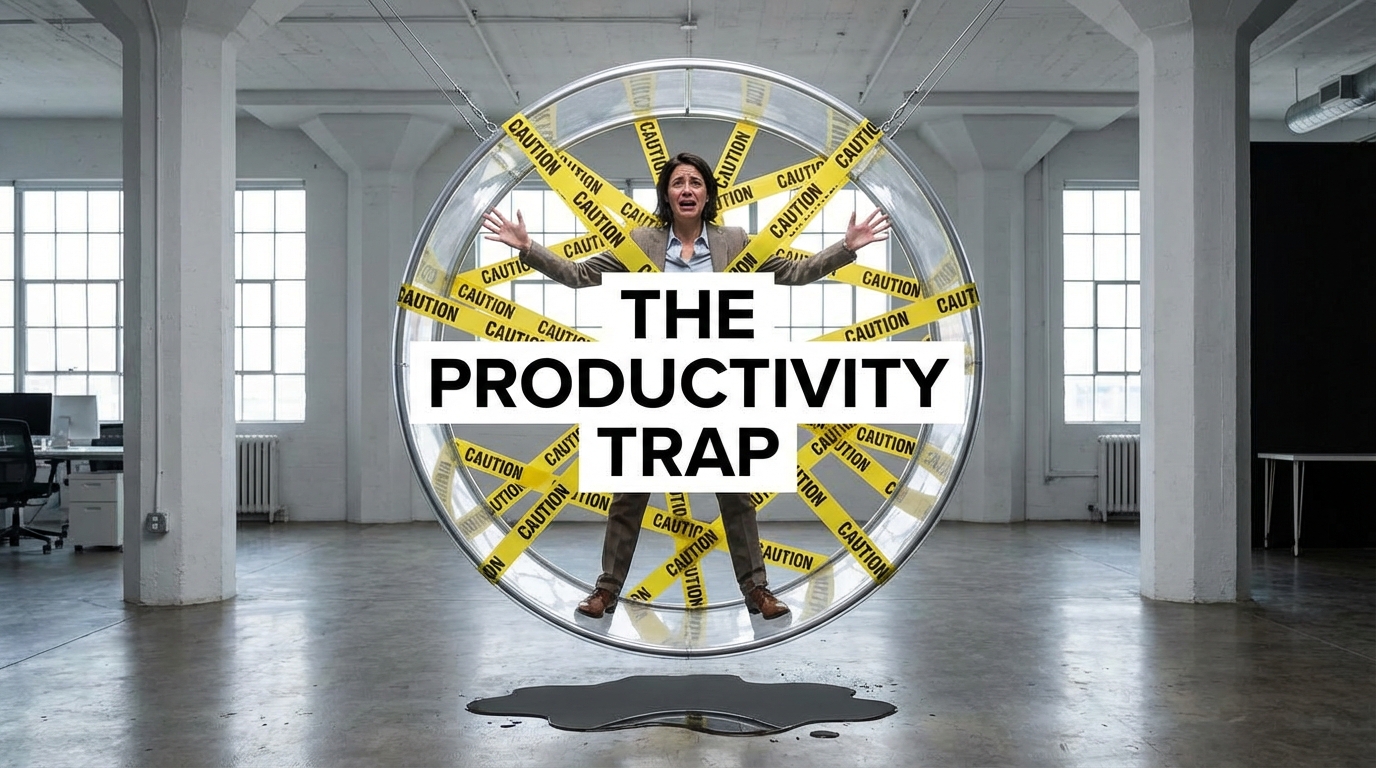
When you know that the prayer is preventing new learning rather than providing protection, you can see the ritual for what it is: a well-intentioned strategy that accidentally became a trap.
And when you know that recovery means building new pathways rather than erasing old fears, you can be patient with yourself. The old alarm might sound for a while. That's okay. You're building something stronger.
What Comes Next
You've now seen the hidden mechanism that turns thought suppression into thought amplification. You understand why the strategy that felt protective was actually maintaining the cycle.
But knowing this raises a question: if delaying compulsions works for intrusive thoughts and hand washing, what about other fears? The ones that feel different, more physical, more visceral?
The principles you've learned here—the monitoring system, safety behaviors that prevent learning, inhibitory pathways that build with practice—apply more broadly than you might expect.
The same brain that learns to tolerate uncertainty about loved ones can learn to tolerate other uncertainties too.
And that possibility might be worth exploring.




Comments
Leave a Comment