

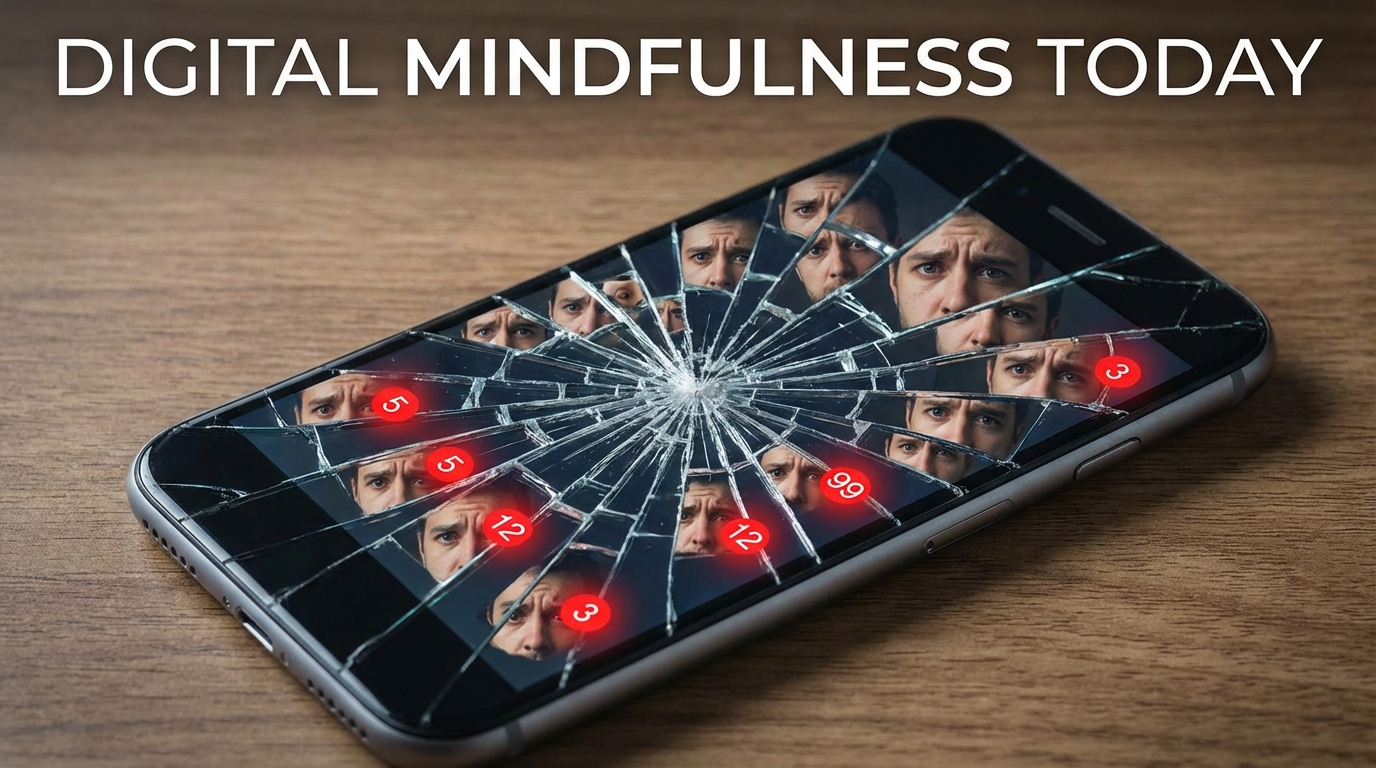
You know that feeling when a simple message sends you spiraling into analysis mode.
What Happens When You Stop Being the Person Everyone Knew
Two coworkers said it within the same week. "You seem more serious lately." "This isn't like you."
You used to be the one people made jokes with. The person who could fire back something funny without thinking twice. Now you're reading a sarcastic message five times, trying to decode whether someone is actually upset with you.
Before you send anything, you check it. Then check it again. Twenty times isn't unusual anymore.
Somewhere along the way, something shifted. And the person you used to be at work—the playful one, the quick one, the one who didn't have to calculate every word—that person went quiet.
Here's what nobody tells you about why this happens, and more importantly, why everything you're doing to stay safe is actually keeping you stuck.
The Message-Checking Trap Nobody Explains
When you check a message for the twentieth time before hitting send, something is happening that you can't see.
Your brain experienced something genuinely harmful. A manager made you apologize, then denied it ever happened. When someone in authority denies reality despite clear evidence—research confirms this is a specific form of psychological manipulation that causes real damage. Your experience was real. Your response to it makes sense.
But here's the mechanism most people miss:
Every time you check a message excessively and nothing bad happens, your brain should learn "this message was safe." That's how the nervous system is designed to work—it gathers evidence about what's actually dangerous.
But when you check twenty times before sending, your brain learns something different entirely.
It learns that the checking is what kept you safe.
Think about it like wearing a lucky charm every single day. Nothing bad happens. So you keep wearing it. After a while, you start to believe the charm is protecting you. You never discover what would have happened without it. You never learn you were safe all along.
The checking isn't reducing your anxiety. It's maintaining it.
What Your Twentieth Check Actually Tells Your Brain
What does the twentieth check give you that the nineteenth didn't?
Really sit with that.
A little more certainty, maybe? The feeling of being careful?
But does the anxiety actually go down after check twenty? Or does it just pause—until the next message arrives, and the whole process starts again?
Research on safety behaviors shows something that sounds backwards at first: the things we do to feel safe often prevent our nervous system from learning that we are safe. Each time you check excessively and attribute the good outcome to your checking, you reinforce the belief that you need to check. The behavior that feels protective is blocking the learning your brain needs to do.
Sometimes checking more actually makes anxiety worse. You start finding problems that probably aren't there. The more you look, the more you find—or think you find.
The Threat Generalization Mistake Your Brain Is Making
Here's where it gets interesting.
Your manager did something harmful. One person. One relationship. That threat was real and specific.
But look at what's happening now. Are you checking messages twenty times with that manager? Or with everyone?
Most people in this situation discover the same pattern: the hypervigilance has spread. The trusted team members you manage—the ones who've never given you any reason to worry—you're checking messages from them too. Your partner noticed you're more tense when work notifications arrive.
Your brain experienced something genuinely harmful and then generalized the threat to all workplace communication.
This isn't a flaw. Your nervous system is designed to protect you. It's programmed to err on the side of caution. One genuine threat, and it starts scanning everything that looks even remotely similar.
But now it's over-protecting. And that's a different problem than being in actual danger.
Why Your Brain Ignores a Hundred Safe Messages
When a message arrives and your mind immediately goes to "this could be an attack," what evidence does your brain generate?
It happened before. The last time I thought things were fine, they weren't. The tone could be hiding something.
That's the evidence for the threat. And it's real—something bad did happen.
But here's what your brain isn't doing automatically: collecting the evidence against.
How many messages have you received from your team members in the last month? Dozens? A hundred?
How many were actual attacks?
For most people answering honestly, the number is zero. The evidence against the threat—for these specific people—is overwhelming. But the brain after trauma doesn't weigh evidence proportionally. It remembers the one bad thing with crystal clarity and discounts the hundred neutral things.
This is where cognitive restructuring comes in—and research shows it's one of the most effective approaches for trauma recovery. The process isn't about telling yourself not to worry. It's about actually examining the evidence.
The thought "this could be dangerous" isn't irrational. Something dangerous did happen. But the thought "this specific person is dangerous" might not match the evidence.
The feeling is real. The interpretation is what we're examining.
How to Challenge Anxious Thoughts Without Dismissing Your Feelings
Here's what a balanced thought looks like:
"This feels dangerous because of my past traumatic experience, but perhaps this is likely just a normal conversation."
Notice what this does. It doesn't dismiss your feelings. It doesn't tell you to "just relax" or "stop being paranoid." It acknowledges the feeling while questioning the interpretation.
You're worried. You might be worried about the wrong things.
The research on cognitive restructuring shows this process—collecting evidence for and against automatic thoughts—consistently leads to reduction in trauma symptoms. Not because it tricks you into ignoring danger, but because it helps your brain make more accurate assessments.
The Simple Guide to Building Your Anxiety Hierarchy
Not everyone in your workplace carries the same level of risk. You already know this intuitively.
If you had to rate your anxiety on a scale of 1 to 100 for messaging different people, what would it look like?
The manager who denied reality? Probably 100. Absolute dread.
One of your trusted team members you work with every day? Maybe 20. Lower, but still present—which tells you something important.
That hierarchy isn't weakness. It's information.
The gold standard approach for reducing this kind of anxiety works with that hierarchy. You don't start at level 100. You start with the people who are barely anxiety-provoking at all. The ones where checking nineteen times instead of twenty feels scary but survivable.
And when nothing bad happens—when you check nineteen times and the outcome is exactly the same—your brain learns something it couldn't learn before.
Nineteen was enough. The twentieth check wasn't what kept you safe.
Then nineteen becomes eighteen. Then seventeen. Each reduction, with the safe people first, teaches your nervous system that the checking was never the thing protecting you.
You Already Know How to Do This
Here's something you might have forgotten.
When you started this job, you were nervous about everything. Imposter syndrome. Worried you'd say something wrong. The anxiety was real.
What happened?
You kept showing up. And it got easier.
You've already used this exact mechanism. The traumatic event reset your baseline, made everything feel dangerous again. But the process for recovery—graded exposure, starting small, letting your nervous system learn through experience—that's the same process that worked before.
You're not facing something new. You're facing something that feels new because the reset was so jarring. But your brain already knows how to do this.
Three Ways to Start Recovery This Week
First: Create your hierarchy. List the people you communicate with at work and rate each one from 1 to 100 based on how much anxiety messaging them creates. Your manager is 100. Your safest team member might be a 5. This map shows you where to start.
Second: Start reducing checks with the low-anxiety people only. Twenty becomes nineteen this week. Pay attention to what actually happens—not what your brain predicts will happen, but what actually occurs. When nineteen works, try eighteen.
Third: When the catastrophic thought hits, write down evidence for and against before accepting it as truth. How many messages from this person? How many were threats? What does the actual data say? You're already skilled at evaluating information in your leadership role—apply that same rigor to your own thoughts.
Your Playful Self Isn't Gone—It's Waiting for Safety
The playful version of you—the one who could fire back something funny without thinking—that person didn't go away. That part of you went into protection mode.
As you gather evidence of safety, as you let your nervous system learn what's actually dangerous versus what just feels dangerous, that version of you will have room to return.
The trauma changed your baseline. It didn't change who you are.
You identified six distinct impacts from this experience—post-apology trauma, trust issues, role paralysis, associative guilt, unstable support structure, and hypervigilance. The hypervigilance and the thinking patterns behind it are addressable with these approaches.
But there's more to explore. How do role paralysis and associative guilt connect to these patterns? Are they separate problems requiring different strategies, or manifestations of the same underlying response?
The framework you've built gives you a map. Now comes the work of walking it.
Your colleagues will notice when the playful person starts showing up again. Not because you forced it or faked it—but because your nervous system finally got the evidence it needed to stand down.
What's Next
How do role paralysis and associative guilt connect to the hypervigilance pattern—are they separate problems requiring different strategies, or manifestations of the same underlying trauma response?




Comments
Leave a Comment