

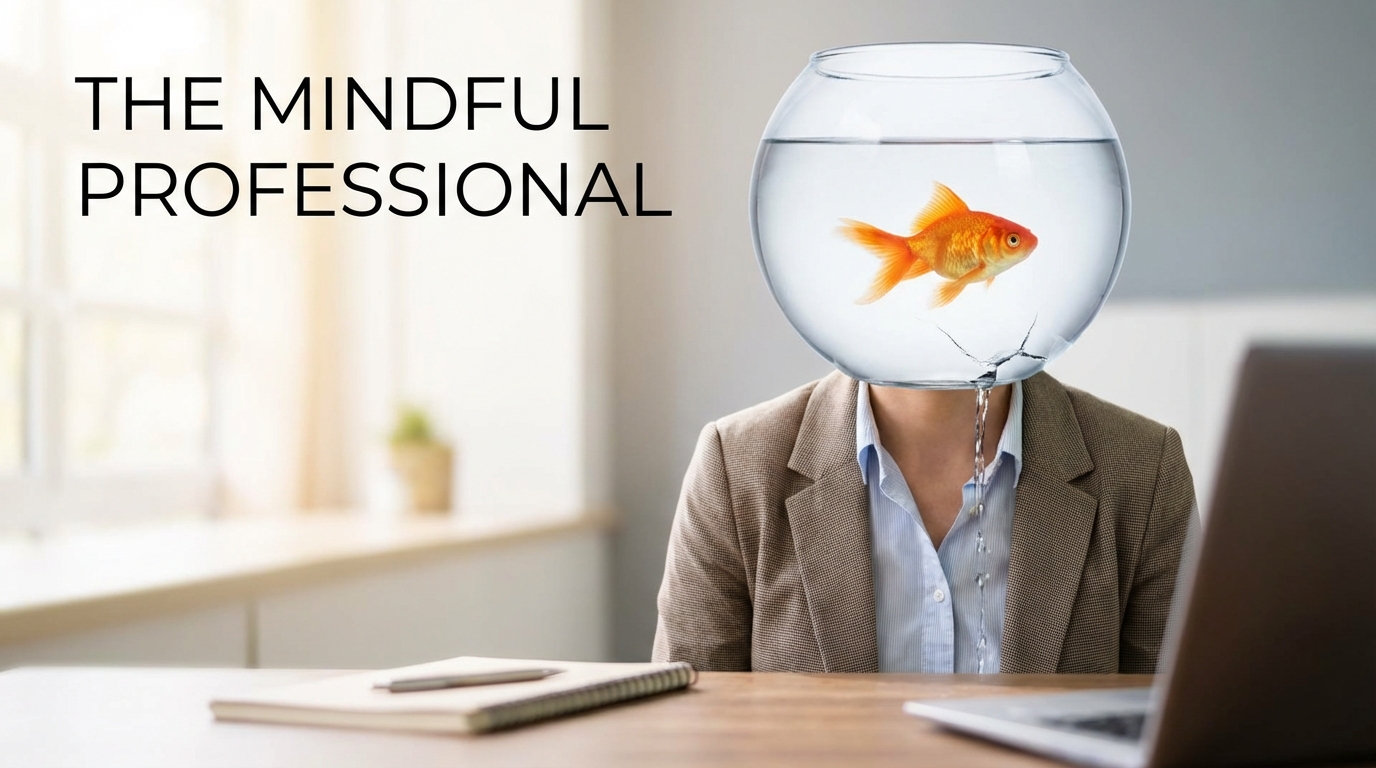
Why Self-Talk Drains You
You're on a large video call. Your camera is on. And somewhere in the back of your mind, a relentless narrator has taken over:
Have I been too quiet? Should I say something? What if someone asks me a question I can't answer? Do I look awkward right now?
The meeting continues, but you've stopped listening. You're too busy monitoring yourself—scanning for mistakes, rehearsing responses, checking your performance from every angle.
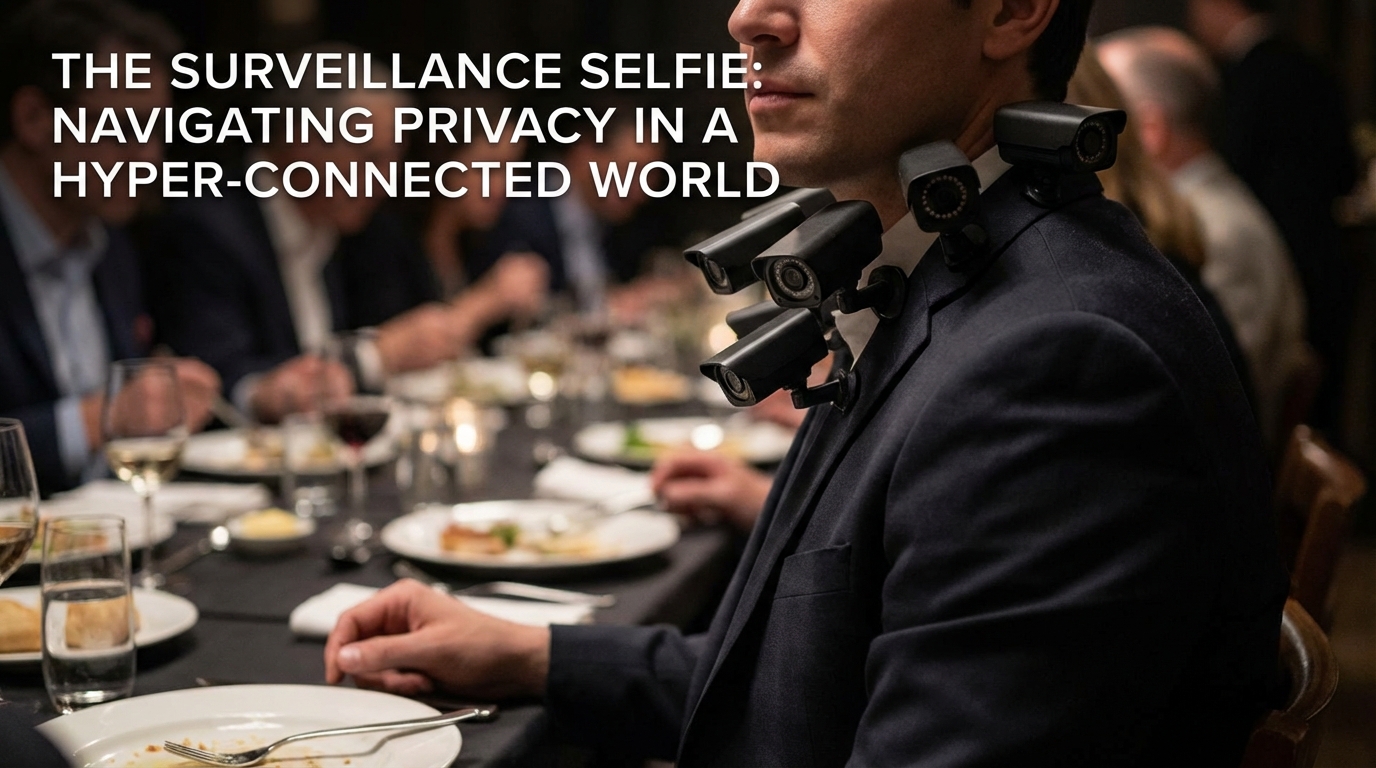
By the time the call ends, you're exhausted. Not from the work. From the constant surveillance you've been running on yourself.
Here's what most people never realize: that internal monitoring isn't protecting you. It's the very thing making your anxiety worse.
The Hidden Loop Driving Your Anxiety
When you walk into an anxiety-provoking situation, something automatic happens. Your attention swings inward. You start watching yourself from the outside—almost like you're viewing yourself through everyone else's eyes.
Research calls this "self-focused attention," and it operates in two forms: the observer perspective (seeing yourself as others might see you) and body sensation focus (hyperaware of your racing heart, your flushed face, your shaky voice).
Both forms have the same effect: they trap your attention inside your own head.
And here's the mechanism most people miss: this inward attention isn't neutral. It actively generates and maintains anxiety. Studies on social anxiety consistently show that self-focused attention doesn't just accompany anxiety—it fuels it.
The monitoring you're doing to protect yourself? It's feeding the very fire you're trying to put out.
Why Your Safety Strategy Makes It Worse
This is where it gets counterintuitive.
The internal monitoring feels protective. If you catch yourself being too quiet, you can fix it. If you prepare for questions you might not know, you won't be caught off guard. The logic seems airtight.
But ask yourself this: You've been monitoring yourself on calls for months, maybe years. Has it reduced your anxiety?
The honest answer, for most people, is no. If anything, the more you monitor, the more anxious you get.
That's because self-monitoring creates a vicious cycle:
- You feel anxious, so you start monitoring yourself
- Monitoring keeps your attention on internal cues (the very things that feel threatening)
- This amplifies your anxiety
- The increased anxiety triggers more monitoring
- Round and round it goes
The thing you're doing to prevent the problem is perpetuating it.
What a Simple Walk Reveals About Anxiety
Consider something interesting: When you go for a walk—really enjoy it, looking at trees, listening to a podcast, noticing the world around you—how anxious do you feel?
For most people, the answer is: not anxious at all. Walking is often when they feel most relaxed.
Now notice where your attention is during those walks. It's outside yourself. You're not monitoring your gait, wondering if other people are judging how you move, checking whether you're walking correctly. Your attention is absorbed by the external world.
This isn't coincidence. Research shows that when attention shifts externally—to the environment, to tasks, to sensory experience—anxiety decreases. Attention to positive feedback from others, or simple engagement with the world, reduces subjective anxiety levels.
The pattern is consistent: external attention, low anxiety. Internal attention, high anxiety.
Why Cooking Quiets the Mental Chatter
Here's where this becomes practical.
Imagine you're cooking dinner. There's chopping to do, timing to manage, heat to monitor, flavors to balance. Your attention gets pulled into the task—watching for when things are ready, adjusting as you go.
And something interesting happens: there's no room left for self-monitoring. Your attention capacity is full. You can't simultaneously track the onions caramelizing AND run internal surveillance on yourself. The external demands of the task naturally displace the inward focus.
This is the forgotten factor that changes everything: your attention has limited capacity. It can either be on yourself or on the external world—but not fully on both at the same time.
This means external focus isn't just a nice idea. It's a displacement mechanism. When you fill your attention with something outside yourself, the self-monitoring gets pushed out. Not through willpower. Through simple physics.
The experience of being "outside your head" while cooking isn't a lucky accident. It's the predictable result of attention being occupied elsewhere.
What Staying Teaches Your Brain
There's another piece to this puzzle.
Picture sitting in a school gymnasium for a parents' evening, waiting 90 minutes or more to speak with teachers. Anxious. Uncomfortable. Every instinct saying leave.
But instead of leaving, you stay. You focus on the posters on the walls. You read every single one. Your attention has an anchor—something external to hold onto—and you make it through.
What happens when you stay?
You learn something your brain couldn't learn any other way: that you can survive it. Nothing terrible happens. The anxiety is uncomfortable, but it doesn't destroy you.
This is what researchers call "inhibitory learning." Your brain needs to experience that the feared catastrophe doesn't occur. It needs new evidence that the situation is survivable. And that evidence only accumulates when you stay.
When you leave early, you never get the data. You never learn that you would have been okay. The fear remains unchallenged because you never let yourself discover that it was wrong.
Staying isn't just about endurance. It's about learning.
The Habit That Erases Your Progress
Now let's address something that might be maintaining your low confidence without you realizing it.
Think about keeping your camera on during a large call when you didn't want to. If someone asked you to list your "wins" for the day, would that make the list?
Probably not. "That's just part of my job. Everyone keeps their camera on."
But here's the question: Does everyone feel anxious about it? Does everyone have to actively choose to keep it on rather than turning it off?
No. For someone without anxiety, keeping their camera on is automatic. For you, it required overcoming something. The outcome looks identical. The effort was completely different.
This is the win you're discounting.
Research identifies this pattern as a cognitive distortion called "discounting the positive." People with high levels of self-criticism—common in social anxiety—tend to minimize or dismiss their achievements. "It's just what anyone would do." "It doesn't count."
But when you don't count your wins, your sense of progress disappears. You feel like you're not doing anything, even when you are. Which decreases motivation. Which increases anxiety. Which makes everything harder.
The simple act of recognizing your actual wins—the things that were hard for you, regardless of how ordinary they look to others—interrupts this cycle.
How to Anchor Your Attention Outside Yourself
So what do you actually do with all this?
The principle is simple: fill your attention with something external.
During calls, give yourself an anchor. This might be:
- A specific person's face to focus on
- Mentally summarizing what's being said (turning listening into an active task)
- Taking notes (even if you don't need them)
- Watching for specific information relevant to your work
The goal isn't to suppress the self-monitoring through willpower. The goal is to occupy your attention so thoroughly with external content that there's no room left for the internal surveillance.
You already know this works. You've experienced it while cooking, while walking, while reading posters at that parents' evening. Now you understand why it works—and you can apply it deliberately.
One Question That Builds Real Confidence
At the end of each day, ask yourself one question:
"What did I do today that was hard for me?"
Not hard objectively. Not impressive to others. Hard for you.
Kept your camera on when you wanted to turn it off? Win.
Stayed in an uncomfortable situation instead of leaving? Win.
Spoke up once when you could have stayed silent? Win.
Research on savoring and positive activity interventions shows that deliberately noting small accomplishments produces measurable increases in positive emotions and motivation. Your brain releases dopamine when you recognize progress—but only if you actually recognize it.
The wins are already there. You've just been filtering them out because they don't meet some invisible standard of "impressive enough." Lower the bar to reality: if it took courage or effort from you, it counts.
What Changes When You See the Pattern
Understanding these mechanisms shifts everything:
The "what if someone asks me something I don't know" thoughts aren't preparation. They're self-monitoring pulling you further inside your head, away from what's actually happening—which ironically makes you more likely to miss something.
Leaving situations early isn't self-care. It's preventing your brain from learning that you can handle it.
Dismissing your achievements isn't humility. It's a pattern that maintains low confidence by erasing evidence of your competence.
The exhaustion after calls isn't from the work. It's from the cognitive load of running constant internal surveillance.
Once you see these patterns, you can't unsee them. And that's exactly the point.
The Harder Question Ahead
There's a question this raises that we haven't fully explored: What happens when the external structures that used to push you into social situations disappear?
When your son's martial arts activities gave you a built-in reason to leave the house, you didn't have to decide each day whether to engage socially. It was just what happened on Tuesdays. Now that structure is gone, and staying home has become the comfortable default.
The attention strategies work for situations you're already in. But what about creating new situations to be in? What about building structures that make engagement automatic rather than a constant willpower battle?
That's a different kind of challenge—one that requires thinking about commitment, community, and how to make showing up feel less like a choice and more like a natural part of life.
For now, start where you are. Use the external anchors. Track your personal wins. Stay in the discomfort long enough to learn you can survive it.
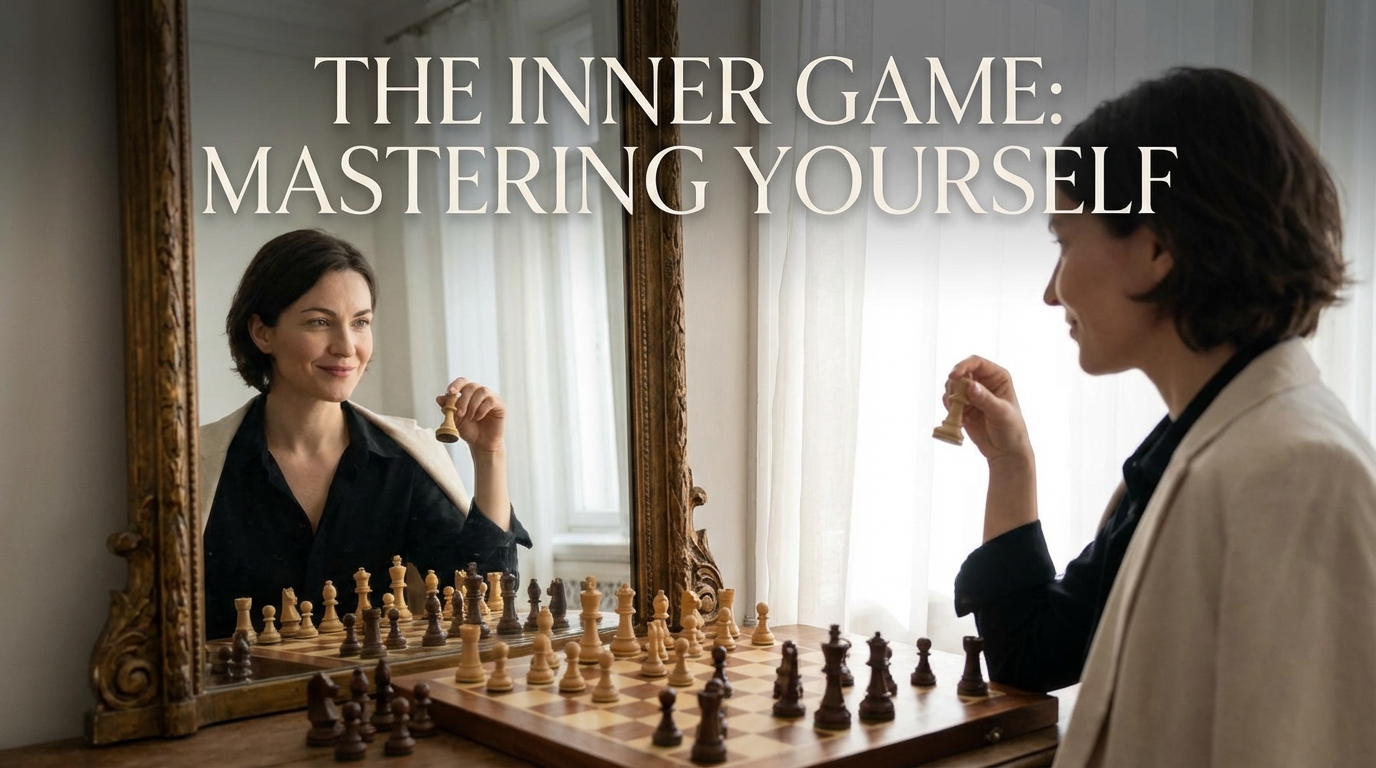
The self-monitoring trap isn't permanent. Once you understand the mechanism, you can work with it instead of being controlled by it.
Your attention is already capable of going outside your head—you've proven that while cooking, while walking, while reading those posters. The skill now is doing it on purpose, in the moments that matter most.
What's Next
How do you build new social structures into your life when the automatic ones (like your son's activities) are gone—especially when avoidance has become the comfortable default?



Comments
Leave a Comment