

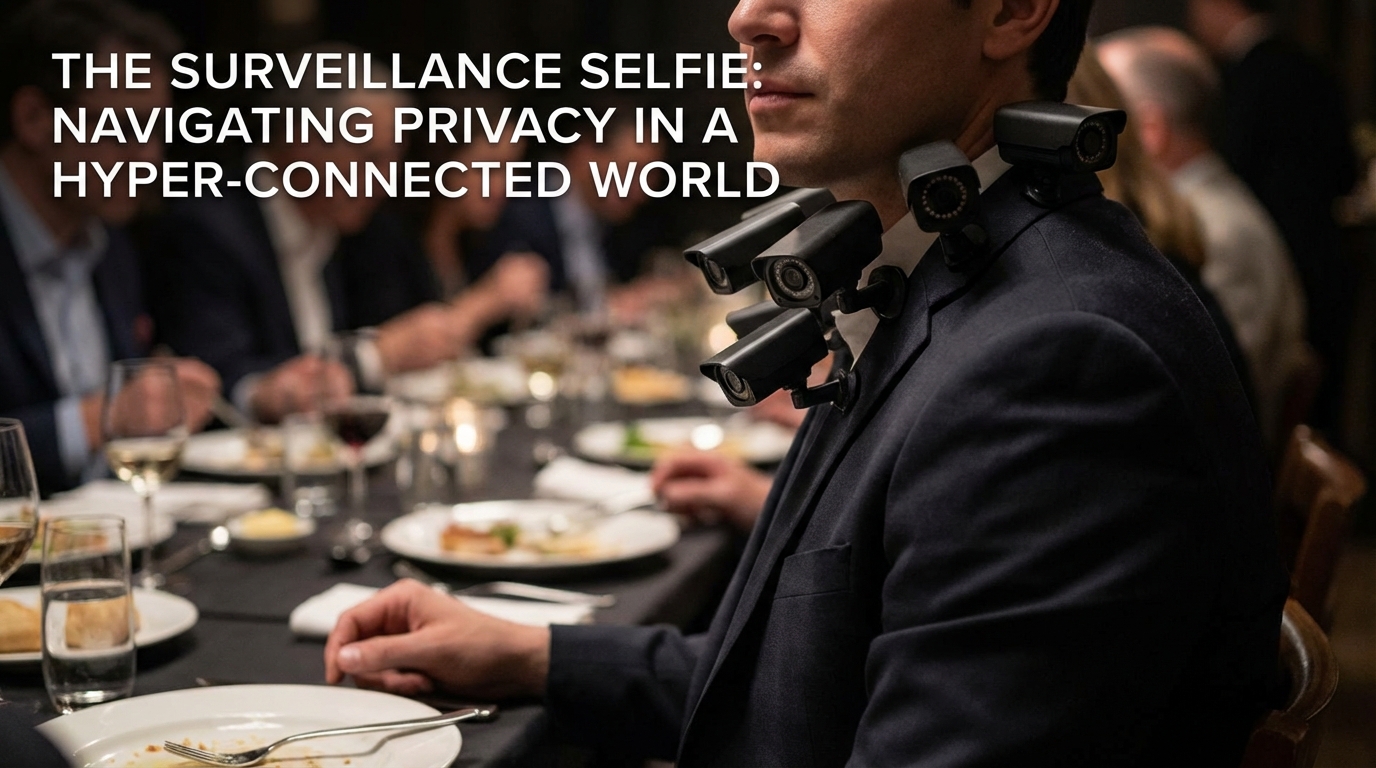
You're at a work event, and your mind is racing. Am I blushing? Do I look weird? What are my hands doing? Did I just sound stupid?
You're trying to catch problems before they get worse. Monitor everything, fix anything that looks off, and maybe—just maybe—you'll get through this without embarrassing yourself.
It feels like vigilance. Like protection. Like the only reasonable thing to do when you're anxious in a social situation.
But here's what nobody tells you: that protective monitoring? It's not protecting you. It's the reason your anxiety never gets better.
The Self-Focus Trap Nobody Warns You About
When you're in a social situation, your attention has to go somewhere. And for people with social anxiety, it typically goes inward—scanning your body for signs of nervousness, checking your performance, monitoring how you're coming across.
Research in clinical psychology has identified this as "self-focused attention," and it's not just a symptom of social anxiety. It's what keeps the anxiety going.
Think about what happens when all your attention is pointed inward:
First, you miss the actual conversation. If you're busy checking whether you look interested enough, you're not actually listening. Someone references something they just said, and you have no idea what they're talking about. You give a weird response because you weren't paying attention—which is exactly what you were trying to prevent.
Second, you're only recording the bad stuff. When you monitor yourself that closely, what kind of information do you pick up? The stumbled words. The shaky voice. The face getting hot. It's like a security camera that only records break-ins and deletes all the footage of peaceful days. You end up with a highlight reel of everything that went wrong.
Third, you block the good information. While you're so busy checking your own face for signs of blushing, you miss that the other person is smiling. Leaning in. Actually enjoying talking to you. Studies show that people with high social anxiety recall more negative information about their performance even when they received positive feedback. The self-focus creates a blind spot for exactly the information that would naturally reduce your fear.
This is a triple hit: the self-monitoring increases your anxiety, impairs your actual performance, AND prevents you from seeing evidence that things went fine.
And here's the part that changes everything: this isn't a personal flaw. It's not you being weak or handling things wrong. Cognitive models of social anxiety identify this as a documented maintenance mechanism—your anxiety persists not because of who you are, but because of where your attention is pointed.
Why 'Face Your Fears' Fails for Over-Involvement
You've probably heard the standard advice: Face your fears. Don't avoid. Lean into the discomfort.
And you've probably noticed it doesn't work for you.
There's a reason for that.
That advice assumes your problem is avoidance—that you're running away from anxiety and need to run toward it.
But that's not your pattern, is it?
Your pattern is over-involvement. You're not avoiding your anxiety. You're constantly engaged with it. Monitoring it. Analyzing it. Reading tips about it. Every time you scroll past anxiety content on social media, you're reminded that you're someone who struggles with this.
Telling someone with an over-involvement pattern to "face their anxiety" is like telling someone who's drowning to get in the water. You're already in the water. You're in it too deep.
So what's the alternative?
External Focus: The Redirect That Works
You can't point your attention inward (that makes it worse). You can't turn your attention off (that's not how attention works—try not thinking of a white bear and see what happens). So where else can it go?
Outward.
Toward the other person. Toward what's actually happening around you.
Researchers call this "external focus," and when they tested it, participants who focused outward and dropped their self-monitoring behaviors reported lower anxiety and more positive self-appraisals than those who stayed internally focused.
The strategy that feels protective—the constant self-checking—actually increased anxiety compared to simply paying attention to the environment and conversation.
This isn't about suppressing your anxiety or pretending it doesn't exist. There's research on something called ironic process theory: try to suppress a thought, and it comes back stronger. That's not what this is.
This is about giving your attention a different job. Instead of "monitor yourself for problems," the job becomes "notice things about the other person and the environment."
How to Stay Present Like a Detective
Think of it like being an investigator. What color are their eyes? What did they just say about their weekend? What's that book on their shelf?
Your attention is going to be somewhere. This gives it somewhere useful to be.
And here's what's interesting: you probably already know how to do this.
If you've ever been absorbed in work—analyzing a client's needs, studying details, looking for patterns—you know what it feels like to be completely focused on something external. In those moments, how much attention is left over for self-monitoring?
None. You're too absorbed in the task.
The same thing happens when you're walking with family or a pet, noticing what catches their attention, commenting on the surroundings, having a conversation about what you're seeing. That's external focus without even trying.
The question is whether you can intentionally deploy that same investigative curiosity in social situations.
3 Steps to Build Your External Focus Habit
You won't do this perfectly. Your attention will snap back to yourself sometimes—that's fine. The goal isn't perfection. It's redirection.
Each time you notice you've gone internal and shift back outward, that's a rep. You're building a different attention habit.
Start small:
Pick three low-stakes interactions this week. Dog walkers. Shopkeepers. Someone in line at the coffee shop. Brief, casual, no pressure.
Give your attention a specific external target. Your only job is to notice one concrete thing about them. Their eye color. An accent. What they're carrying. Something about their dog.
When you catch yourself self-monitoring, redirect. Don't beat yourself up for going internal. Just shift back out. Notice something else about them or the environment.
This isn't about being less anxious before you act. It's about putting your attention somewhere useful regardless of how anxious you feel.
What Happens When You Stop Self-Monitoring
When you shift from internal monitoring to external focus, three things reverse:
Your anxiety decreases because you're not feeding yourself a constant stream of negative self-data.
Your performance improves because you're actually present in the conversation.
And—maybe most importantly—you start gathering disconfirming evidence. You notice when people respond warmly. When they seem interested. When the interaction goes fine.
Your brain finally gets the data it needs to update. Instead of only recording the break-ins, you start seeing the peaceful days too.
Beyond the Event: The Full Picture
You've now got a handle on the "during event" piece—external focus instead of self-monitoring.
But remember those other two phases? The weeks of anticipatory worry before events. The post-mortem analysis afterward where you can't give yourself credit for showing up.
Both of those involve the same thing: attention stuck on anxiety, just pointed at different time periods.
If external focus works during events, what happens when you apply the same principle to the worrying-in-advance? Or to the analyzing-after?
That's worth exploring. Because if the pattern is attention over-involvement across all three phases, then the solution might be simpler than you think—not three different strategies, but one principle applied three different ways.
Your attention is going to be somewhere. The only question is whether you keep pointing it at yourself, or whether you give it something more useful to do.
What's Next
How does the same attention redirection principle apply to the pre-event worry phase and the post-event analysis phase where self-credit feels impossible?



Comments
Leave a Comment