


Someone laughs loudly outside your window. Instantly, your whole body goes tense. Heart speeds up. You feel like you need to be on guard—like something bad is about to happen.
Even though you know it's just people walking by.
That split—where your thinking brain knows there's no danger but your body responds like there is—might be the most frustrating experience you face. Night after night, the neighbor's footsteps wake you. Your chest tightens before you're even fully conscious. Anxiety, then anger. The pattern repeats.
You've probably tried reasoning with yourself. Told yourself it's nothing. Maybe criticized yourself for overreacting. If that worked, you wouldn't be reading this.
By the end of this page, you'll understand why your body reacts before your brain can catch up. And you'll have four simple ways to calm yourself down that actually work.
Here's what's actually happening—and why your usual approaches never stood a chance.
Why Your Alarm Response Isn't a Flaw
Your nervous system has been scanning for threats since before you were born. It's designed to detect danger and prepare your body to respond—faster than you can think. This isn't a flaw. It's how you're built.
But here's what most people don't realize: your nervous system can be conditioned. It learns what counts as dangerous based on your experiences.
Think back. When did your body first learn that sudden sounds meant something bad might follow?
For many people, it was childhood. Environments where you never knew when something was going to go wrong. Where loud voices often meant conflict was coming. Your nervous system made a decision back then—a smart decision, actually—to treat sudden sounds as early warning signals.
If you catch danger early, you can prepare. You can protect yourself.
What would have happened to a child who ignored all those sounds? They might have been caught off guard. Not been ready for what was coming.
So your body installed a protection program. And that program worked.
The Old Programming Problem
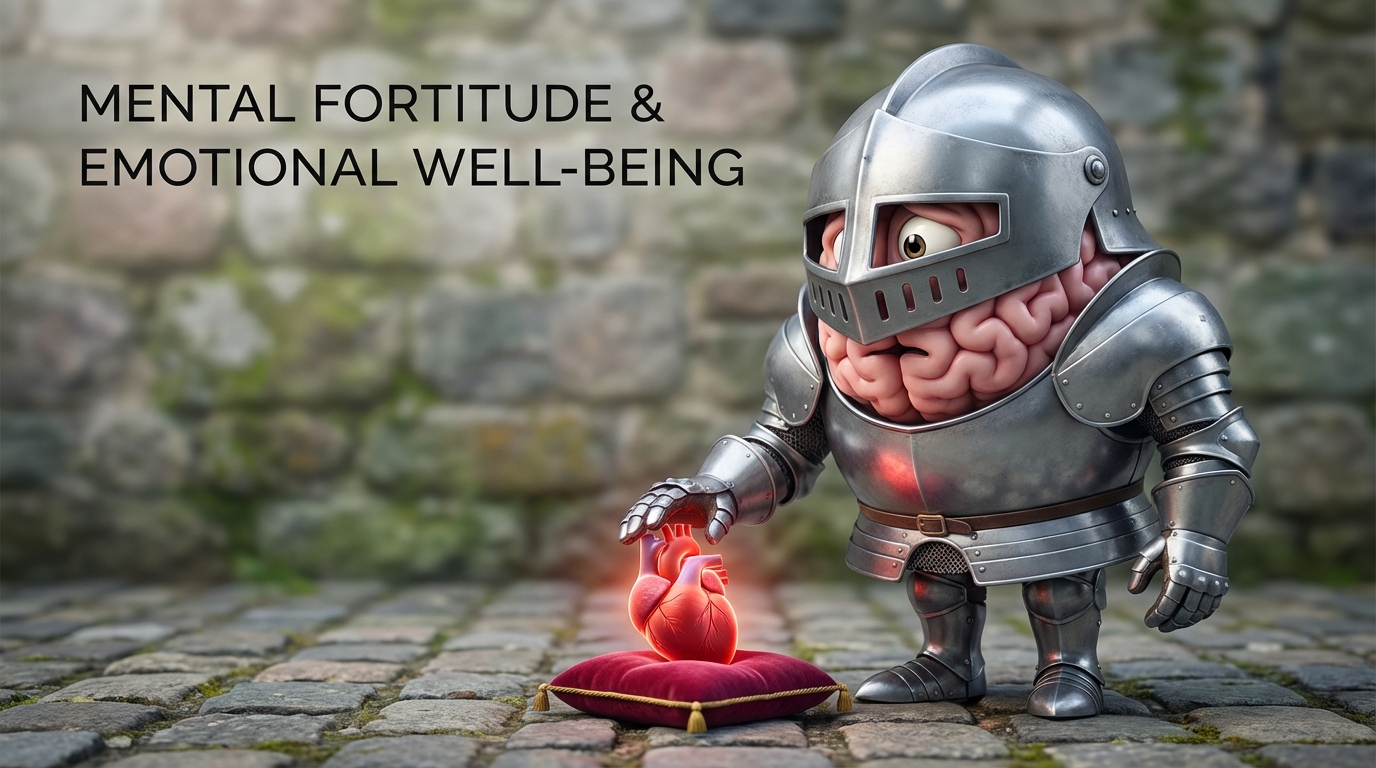
The issue isn't that your alarm system is broken. It's that the program is still running the way it was written years ago—in a situation that no longer exists.
You're not in that childhood environment anymore. But your body doesn't know that. It's still scanning, still reacting, still trying to keep you safe from threats that aren't there.
This is why telling yourself "it's just neighbors" doesn't stop the reaction. Your nervous system doesn't speak the language of thoughts.
And here's where it gets worse: when you criticize yourself for reacting, you've now got the original alarm response plus a secondary layer of self-attack on top. Your nervous system fires, then you beat yourself up for it firing. Now you're not just threatened by external sounds—you're under internal attack too.
There's no escape. The very thing you're doing to try to fix it is making it worse.
How to Talk to Your Nervous System
If thinking your way out doesn't work, and criticizing yourself makes things worse—what's left?
This is where it gets interesting.
Your nervous system doesn't speak the language of thoughts. It speaks the language of body sensations, movement, breath, and sensory input. To change the program, you need to communicate in a language it actually understands.
And research has identified several pathways you can use to do exactly that.
The Access Point No One Talks About
Do you know where on your body the vagus nerve—the nerve that runs your calming system—actually reaches the surface of your skin?
Most people guess the chest. Near the heart. Somewhere that makes intuitive sense.
They're wrong.
It's your ear. Specifically, the inner bowl of your ear. That's the only place on your entire body where neurons from the vagus nerve reach the surface of your skin.
This means when you gently massage that area—slow, circular pressure on the inner bowl, not the lobe—you're sending a direct signal to your calming system. No thoughts required. No willpower. You're speaking directly to the part of your nervous system that can shift you out of alarm mode.
Research on auricular vagus nerve stimulation shows it activates the parasympathetic nervous system and reduces anxiety without medication or complex practices. It sounds almost too simple. But simple doesn't mean ineffective.
Try it now. Thirty seconds of gentle massage on the inner bowl of your ear. Notice what happens. Many people report yawning, heavy eyelids, shoulders dropping. Signs the nervous system is actually shifting.
The Attention Redirect
There's another pathway. When your nervous system is in alarm mode, your attention narrows and fixates—on the fear, the racing thoughts, the body sensations. Tunnel vision on the threat.
But here's what most people don't realize: you can't be hypervigilant AND fully present to your external senses at the same time. They use the same resources.
The 5-4-3-2-1 technique works because of this limitation. When you deliberately flood your attention with sensory information—five things you see, four you hear, three you can touch, two you smell, one you taste—you're not just distracting yourself. You're redirecting the same attentional resources your alarm system was using.
The anxious chatter has nowhere to live because you've occupied all the bandwidth. Your mind becomes quiet—not because you forced it, but because there's no room left for the alarm.
The Scent Backdoor
There's a third pathway that's even more direct. Your olfactory system—your sense of smell—has a unique shortcut to the emotional centers of your brain. Research shows olfactory pathways connect directly to the amygdala and hippocampus, the brain regions that process emotion and memory.
This means scent can bypass your cognitive processing entirely and directly affect your emotional state.
Find a scent you love. Something comforting. Vanilla, coffee, a favorite perfume. Keep it accessible.
When you notice yourself triggered—thinking about a difficult person, feeling that anger or tension rise—smell that scent. Don't try to think anything. Just smell.
Many people report the physical tension dissolving before they even finish inhaling. The anger might still be there intellectually, but the body lets go. You've found a backdoor into your own nervous system.
The Tension Release
The fourth pathway addresses something your body is already doing: holding tension. When your nervous system stays in alert mode, your muscles stay contracted. This tension becomes background noise you stop noticing—until someone points out your shoulders are up by your ears.
Progressive muscle relaxation works by systematically tensing and releasing muscle groups. A comprehensive review of 46 studies confirms it effectively reduces anxiety, stress, and depression. It works by directly reducing sympathetic nervous system activity—the fight-or-flight response.
When combined with other techniques, the effects are even stronger.
4 Calming Strategies That Actually Work
Here's the thing: nervous system states vary. What works when you're lying awake at 2 AM might not work in the middle of a stressful conversation. What works for the startle response might not work for the slow-building tension.
Having four different pathways—vagus nerve, attention, scent, muscle release—means you have options. You're building a toolkit, not depending on a single solution that might not fit every moment.
The ear massage might be perfect for moments when you need something subtle. The scent grounding might save you in a meeting when you can't do anything obvious. The 5-4-3-2-1 might be what you need when your thoughts are spiraling.
You're learning multiple languages your nervous system speaks.
The Hidden Problem with Suppressing Joy
There's something else that often shows up alongside hypervigilance—something that seems completely unrelated until you see the connection.
The suppression of joy.
Maybe you feel happy and want to sing, but something stops you. An immediate wall goes up. You feel like if you sing, someone will criticize you or think you're being "too much." So you shut it down before it even starts.
Whose voice do you hear when you imagine that criticism?
For many people, it traces back to a parent. A mother who was a musician and corrected their singing. A father who dismissed their enthusiasm. Someone who taught them that expressing joy meant risking criticism and shame.
Here's what's striking: this is the same pattern as the startle response. Your nervous system learned to suppress joy to avoid pain, just like it learned to stay alert to avoid danger. Different trigger, same protection mechanism.
Childhood emotional invalidation—parental criticism of emotional expression—creates chronic emotional inhibition in adulthood. Research shows this isn't a character flaw. It's learned protection that became automatic.
The same techniques that help with hypervigilance can help here too. When you feel the urge to sing and notice that wall going up, you could massage your ear to signal safety. You could use your attention to stay present instead of spiraling into imagined judgment.
You're not fighting yourself. You're communicating with your nervous system in its own language.
The Truth About Your Nightmares
One more thing. Those disturbing dreams—the ones that make you wake up feeling worse than when you went to sleep—they're not your brain attacking you.
They're your brain trying to help you.
During the day, you manage traumatic material, keeping it at bay. At night, when your defenses are down, your brain attempts to work through that material. The nightmares are the processing in action.
Research on trauma and sleep shows that nightmares represent the brain's attempt to process and consolidate difficult memories. It's uncomfortable. But it's actually a sign your mind is trying to heal, not harm you.
This doesn't make the nightmares pleasant. But knowing they're part of processing—rather than evidence you're getting worse—changes something. They're not random cruelty. They have a purpose.
4 Tools That Work
You have four tools:
1. Ear massage — Gentle pressure on the inner bowl of your ear activates your vagus nerve directly. Use it when you notice startle responses, when you wake up anxious at night, when you need something subtle.
2. 5-4-3-2-1 grounding — Five things you see, four you hear, three you touch, two you smell, one you taste. Use it when your thoughts are spiraling or you're stuck in your head.
3. Scent grounding — Keep a comforting scent accessible. Use it when triggered by a person or situation, when you need to bypass your thinking entirely.
4. Progressive muscle relaxation — Systematic tension and release. Use it for built-up tension, sleep difficulties, or when you have time for a longer practice.
Your job this week is to notice which situations call for which tool. Some moments might need the quick ear massage. Others might need the scent. You're building awareness of your nervous system's signals and learning to respond in languages it understands.
You're not broken. You're running old programs that made perfect sense when they were written. Now you have the ability to update them—not by thinking harder, but by speaking your body's language.
The Secret to Lasting Change
The colleague situation, the noise sensitivity, the singing inhibition, the nightmares—they're all connected to the same underlying pattern. Your nervous system learned to protect you from past threats that aren't present anymore.
As you practice these techniques, you may start noticing other areas where the same pattern shows up. Places you've been limiting yourself without realizing it. Moments where the old protection is costing you more than it's giving.
And that raises a question worth sitting with: if these are all protective patterns that became conditioned over time... what would it take to address not just the symptoms, but the deeper experiences that created them?
That's territory worth exploring.
The nervous system regulation strategies described in this article are supported by research on auricular vagus nerve stimulation (Frontiers in Integrative Neuroscience, 2024), progressive muscle relaxation (Psychology Research and Behavior Management, 2024), and olfactory-limbic connections (Brain Sciences, 2024). The connection between childhood emotional invalidation and adult emotional inhibition is documented in Child Abuse & Neglect and Journal of Family Psychology research.
What's Next
As I notice this protective pattern showing up in other areas of my life beyond startle responses and singing inhibition, how do I work with the deeper trauma that created these patterns in the first place?



Comments
Leave a Comment