

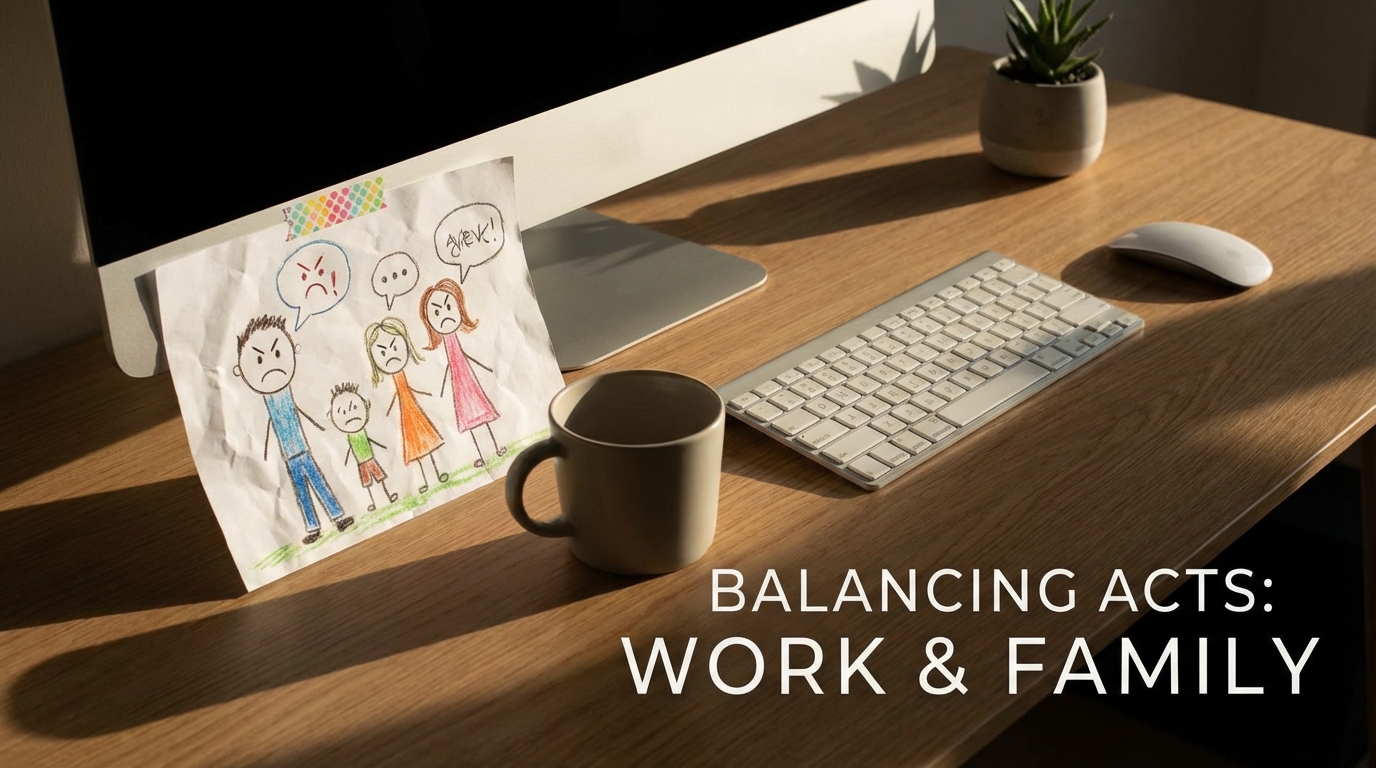
Why Does One Conversation Ruin Your Whole Week?
Someone at work was dismissive. Maybe aggressive. They twisted your words or refused to hear what you were actually saying. And now—three days later—you're still running the conversation through your mind.
You keep analyzing what you could have said differently. Rehearsing better responses. Trying to figure out how to prevent this from happening again.
It feels like problem-solving. Like if you just think about it long enough, you'll find the solution—some strategy that will protect you next time.
But here's what I want you to notice: after three or four days of this analysis, have you actually found that strategy?
If you're being honest, probably not. You've been circling. Replaying. Planning. And nothing has resolved. The promised solution hasn't appeared. You just feel awful.
So if this thinking isn't actually producing solutions... what is it doing?
By the end of this page, you'll understand why small work conflicts hit you so hard. And you'll know exactly how to break the cycle.
The Hidden Beliefs Running Your Reactions
What most people don't realize when they're caught in post-conflict rumination is that there's a hidden system running behind the scenes—one that was installed decades ago and is still shaping how you interpret everything that happens to you now.
Researchers call these schemas—core beliefs about yourself, others, and how the world works. They develop in childhood, primarily through repeated experiences with caregivers, and they act like a lens that shapes your perception of current events.
Think of schemas as an operating system running in the background of your mind. You're not aware of it most of the time. But it's constantly filtering and interpreting incoming information based on rules that were written when you were very young.
When that colleague was dismissive—when she wouldn't listen to what you were actually saying, when she later misrepresented the conversation—something happened beyond just that moment.
Your operating system recognized a pattern.
What Nobody Tells You About Your Triggers
Here's where this gets interesting. When you feel that familiar constellation of emotions after a dismissive interaction—the tightness in your chest, feeling small, the rising panic because no matter what you say it isn't being received—ask yourself: is this the first time you've felt exactly this way?
For most people who struggle with this pattern, the answer is no.
That specific feeling of helplessness, of your version of reality not mattering, of speaking and not being heard—it usually traces back to childhood. To a parent who wouldn't listen. Who would dismiss or get aggressive. Who would later deny what was said.
Research on developmental trauma shows something striking: these responses can remain dormant for years, even decades, until interpersonal interactions later in life—peer conflicts, workplace challenges, dismissive colleagues—trigger the original pattern.
So when your colleague was dismissive, she didn't just dismiss you in that moment. She unknowingly confirmed a belief you've been carrying since childhood: conversations are dangerous. If I say something, it can be twisted. People won't believe my version. I'll be blamed even when I didn't do anything wrong.
Your emotional response wasn't proportional to one HR meeting. It was proportional to decades of experience.
The Overthinking Mistake That Keeps You Stuck
Now here's the part that changes everything.
That overthinking you've been doing—the mental rehearsing, the analyzing, the planning how to prevent future incidents—that's not a new strategy you developed as an adult.
It's a childhood survival strategy.
When you were young and dealing with an unpredictable parent, hypervigilance made sense. You couldn't control them, but you could try to predict them. You'd lie awake planning conversations, rehearsing different scenarios, trying to anticipate what might go wrong so you could stay safe.
The overthinking that feels like problem-solving? It's the same pattern, running decades later.
And here's the counterintuitive truth that research consistently shows: strategies that provide short-term relief often maintain long-term problems.
The overthinking promises protection—if I plan enough, I'll be safe. But what it actually delivers is four days of distress with no resolution. Studies on rumination reveal it's a maintenance factor, not a solution. It keeps the distress cycle spinning.
The very thing you're using to cope is what's keeping you stuck.
The Vicious Cycle You Can't See
Let's map this out:
- 1. Trigger: A dismissive interaction at work
- 2. Schema activation: Your childhood beliefs about conversations being dangerous get triggered
- 3. Disproportionate emotional response: You feel small, helpless, panicked—the full weight of past experiences
- 4. Coping strategy kicks in: Overthinking, analyzing, planning (childhood survival mode)
- 5. Strategy fails to resolve: Days pass, no solution appears, distress continues
- 6. Return to step 4: More overthinking, trying harder at the same failing strategy
This is the vicious cycle. The strategy that once helped you survive an unpredictable home environment is now maintaining your suffering as an adult. It's not that you're broken—you're running outdated software.
What Changes When You See the Pattern
Once you see this pattern, something shifts.
You're not just reacting to your colleague. You're reacting to every time your mother did the same thing. The emotional intensity makes sense now—it's not weakness or oversensitivity. It's an accumulated response.
And the overthinking isn't protecting you. It's the childhood part of you trying to do the only thing it knew how to do. But you're not that powerless child anymore. You have options you didn't have then.
Research on schema change shows something encouraging: when people understand why they feel what they feel—when they can trace their emotional response back to its origins—they're no longer at the mercy of the reaction. The intensity might not vanish immediately, but they have context. They have understanding.
How to Stop the Spiral
First, name what's happening.
Say it out loud if you need to: This is my schema being activated. Just naming the pattern creates a small gap between trigger and response.
Second, ask the percentage question.
What percentage of this reaction is about right now, and what percentage is about the past?
Maybe 20% is about your colleague. Maybe 80% is about every time you weren't heard as a child. Just asking creates distance.
Third, recognize the overthinking for what it is.
It's not problem-solving. It's your childhood survival strategy trying to protect you. Thank it—it served you once—and then ask: What would an adult response look like here?
You're not trying to make the feelings disappear. You're trying to respond as the capable adult you are, not the powerless child who developed these patterns.
Fourth, expect to feel raw.
When you start recognizing these patterns, you might feel worse before you feel better. Research on emotional processing shows this is actually part of healing, not a sign that something is wrong. Encountering activated schemas can temporarily intensify emotional responses as awareness grows.
The rawness isn't failure. It's the pattern becoming visible.
What Your Body Still Remembers
If conversations trigger your schemas, there may be other patterns running too.
Do you sleep lightly? Remain hypervigilant to sounds? Research shows that chronic childhood stress—like parents fighting at night—can leave lasting patterns in how your nervous system responds to rest. The body stays alert even when the original threat is decades gone.
These body-level patterns operate differently from the ones you can think about. Understanding the cognitive piece—the beliefs, the interpretations, the overthinking cycle—is one layer.
But schemas aren't just thoughts. They're stored in the body.
That's the next piece worth exploring: how to work with patterns that live in your nervous system, not just your mind. Because once you see how childhood experiences shape your interpretations, the question becomes—how do they shape your body? And what do you do about that?
The feelings you're experiencing aren't signs that something is wrong with you. They're signs that an old pattern is running—one that made sense when it was installed, but that you've now outgrown. Recognition is the first step. What you do with that recognition is what comes next.
What's Next
How do I work with schemas that are stored in my body—like the hypervigilance and light sleeping—not just the ones I can think about?




Comments
Leave a Comment