

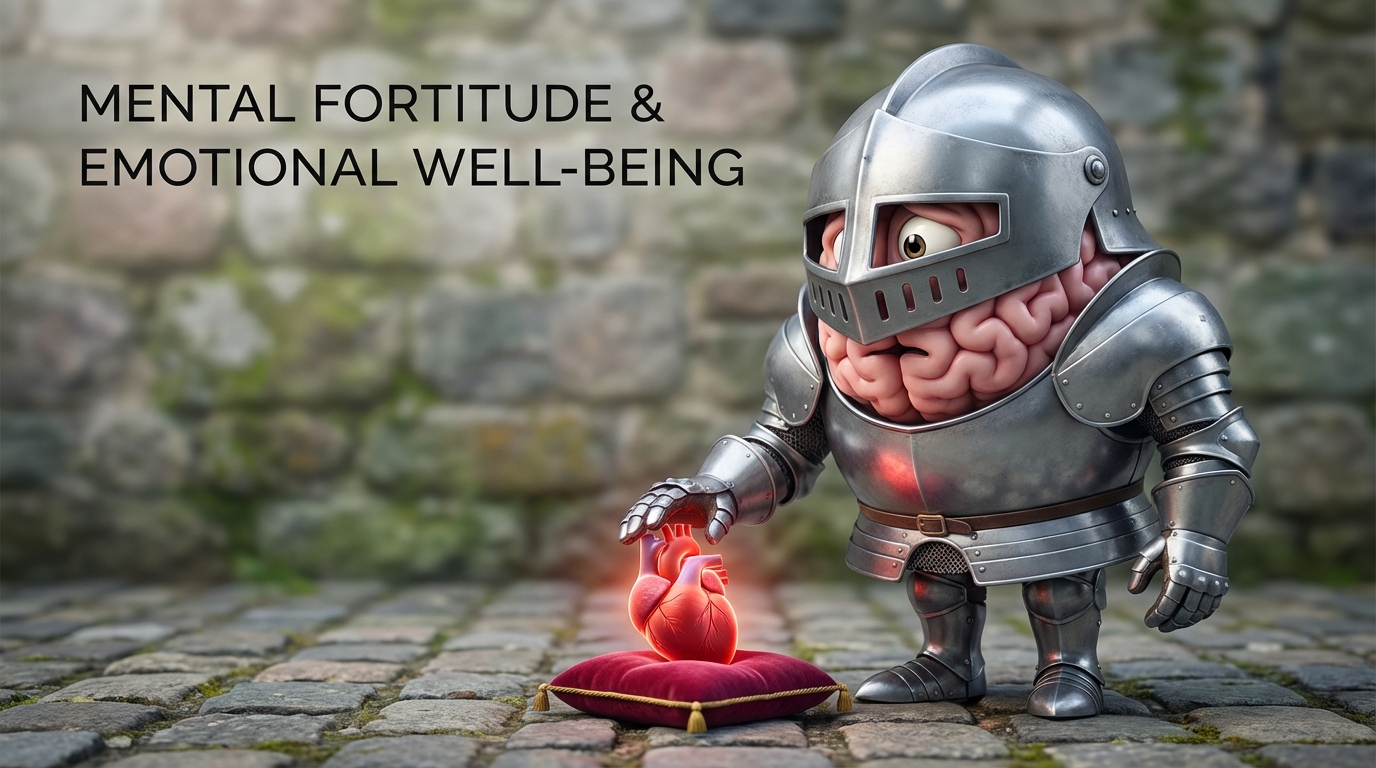
You know that feeling. The one where your mind won't stop scanning for threats—at work, at home, in every conversation. You're waiting for your manager to finally realize you're not good enough. Waiting for your partner to see through you. Waiting for the other shoe to drop.
You might spend more than half your day in this state. The probability of something bad happening feels overwhelming—maybe 70 or 75 percent certain—even when nothing has actually gone wrong. Even when your reviews are positive. Even when people tell you they value you.
And underneath all of it, there's this belief that won't budge: I'm not really likable. People probably find me boring.
If this sounds familiar, what I'm about to share might change how you understand yourself.
By the end of this page, you'll understand why you feel this way. And you'll see that it's not a character flaw—it's your brain doing exactly what it learned to do.
The Truth About Your Threat-Detection System
What most people don't realize is that their nervous system is running a threat-detection program that was installed years—sometimes decades—ago. And here's the part that matters: this program operates outside your conscious awareness.
You can't just decide to turn it off. You can't reason your way out of it. That's not a failure of willpower. It's how the system is designed.
Research on trauma shows that when children are exposed to unpredictable threat—especially from caregivers—their brains develop heightened reactivity to danger signals. Studies using brain imaging have found increased neural activity in the brain's alarm centers, and this heightened reactivity happens automatically, below the level of conscious thought.
So when you're at work and you feel that familiar dread—I'm going to make a mistake, I'm going to get sacked—that's not irrational thinking. That's your threat-detection system doing exactly what it was programmed to do.
The question is: where did this programming come from?
Why Your Hypervigilance Makes Sense
Imagine a child living with an unpredictable parent. Someone who might be fine one moment and dangerous the next. When he'd been drinking, you could sometimes tell from small signs—the way he walked, the tone in his voice.
For that child, scanning for danger wasn't paranoia. It was survival.
If you caught those signs early, you could disappear. Slip out. Avoid getting hurt. The hypervigilance—that constant, exhausting alertness—wasn't a flaw. It was intelligence. It kept you safe in an environment where real danger existed.
Your brain learned: Scanning for threats keeps me alive.
And here's what your brain doesn't know: the danger has passed. Your nervous system is still running the same program, but now it's scanning your supportive manager, your loving partner, your safe workplace. It's still looking for signs of the violence that hasn't come in years.
The alarm isn't broken. It's just... outdated.
The Hidden Logic Behind Your Worst Traits
This isn't just about anxiety. The same principle applies to other patterns you might have been criticizing yourself for.
The people-pleasing. If you grew up with someone unpredictable and sometimes violent, what would have happened if you'd stood up to them directly? You would have been hurt. Fighting back wasn't an option. So what was the intelligent strategy? Appease. Don't make waves. Keep everyone happy so they don't turn on you.
That's not weakness. That's reading your environment and adopting the strategy that gave you the best chance of getting through safely. Research now recognizes this as a distinct trauma response—sometimes called the "fawn" response—that develops when the threat is a caregiver and direct confrontation isn't safe.
The difficulty trusting. Taking five or six years to let someone close isn't a social defect. It's protection. Your brain learned that the people who should have been safest—parents, caregivers—were actually sources of pain. If that's your template for relationships, slow trust makes perfect sense.
Studies on attachment and trauma describe something called "epistemic hypervigilance"—the nervous system's learned wariness about connection and information from others. It's your brain's attempt to prevent the pain you experienced before.
The belief that you're not likable. This one feels like a fact. It doesn't feel like a symptom. But follow it back.
If you had a parent who was highly critical—where 95 wasn't good enough, it should have been 100, where everything you did was wrong—what conclusion would any child eventually reach? That there's something fundamentally wrong with them. That they're defective.
But here's what research shows: negative self-beliefs like "I'm not likable" or "I'm boring" are trauma symptoms, not accurate self-assessments. They're echoes of being raised in an environment where you couldn't win. Studies on complex PTSD confirm that distorted negative self-concept is a core feature of the condition—not because it's true, but because the brain absorbed impossible standards.
Your partner of eight years—do they find you boring? Your supportive manager—do they think you're unlikable? The evidence probably says something very different from what your nervous system keeps telling you.
Why 'Broken' Is the Wrong Word
So here's the shift:
You're not broken. You're adapted.
The anxiety, the distrust, the people-pleasing, the self-criticism—these weren't character flaws developing. These were survival strategies forming. The child who learned to read their parent's moods, who became their mother's emotional support, who stayed invisible to avoid harm—that child was doing everything right given the circumstances.
The question now isn't how to fix what's wrong with you. It's whether those same strategies still fit the life you've built.
You've found a partner who's proven safe over eight years. You've found a manager who shows genuine support. Your threat-detection system is still operating as if you're in your childhood home. But you're not.
How to Update Your Protection System
Once you understand that these patterns are protective adaptations rather than personal defects, something shifts. You're not fighting yourself anymore. You're updating your system.
Here's what that looks like in practice:
Step 1: Label it. When you feel the anxiety spike—that 75 percent certainty of disaster—say to yourself: This is my protection system activating. Don't fight it. Just name it. You're acknowledging what's happening without believing it's the whole truth.
Step 2: Trace it. Ask yourself: What was this trying to protect me from originally? Usually, it'll trace back to your childhood home. The scanning was about your father. The people-pleasing was about staying safe. The distrust was about parents who should have been safe but weren't.
Step 3: Check the evidence. Ask: What's actually happening right now? Am I in danger, or is my old system misreading the situation? Your manager has given you positive reviews. Your partner has stayed for eight years. What does the evidence say about the probability of disaster?
You're not trying to eliminate the automatic response. You're creating a pause between the reaction and your choice about how to respond. Working with your brain instead of against it.
You've Already Proven You Can Change
Here's something you might not have connected: if you've already done work on yourself—if you no longer feel responsible for your parents' emotional states, if you can hold boundaries without guilt—then you've already proven you can update these systems.
You changed a pattern that once felt unchangeable. The anxiety and trust patterns are just the next layer.
Research on trauma-focused treatments shows that 40 percent or more of people with PTSD achieve remission with appropriate intervention. The patterns that feel permanent aren't. Your brain learned them, and it can update them—especially now that you have something your childhood self never had: evidence that people can be trustworthy.
The Next Question
Understanding that your responses are protective adaptations is the foundation. It shifts everything from fighting what's wrong with you to updating what no longer fits.
But if your symptoms are intense—the nightmares, the avoidance, the hypervigilance that won't settle—you might be wondering: Once I have this foundation, what comes next? How do I actually process the underlying memories that keep these patterns locked in place?
That's the next phase of the work. And it builds on exactly what you've started here: recognizing that the child who developed these strategies wasn't broken. They were surviving. And the adult who carries them forward has more options than they ever did.
The shame you've felt about how you are? That itself is a symptom—pervasive shame is part of this pattern. But here's what's true: you survived an environment that was genuinely dangerous. You developed intelligent strategies to do that.
The question now is what becomes possible when you stop treating yourself as the problem.
What's Next
Once stability is built with the noticing practice, what are the specific trauma-focused approaches that can help process the underlying memories and nightmares?




Comments
Leave a Comment